
Medical breakthroughs like vaccines, cancer therapies, and innovative treatments for chronic diseases have transformed healthcare, saving countless lives and improving the quality of life for millions. For instance, the rapid vaccine development and deployment for COVID-19 was pivotal in mitigating the global pandemic, demonstrating the profound impact that well-conducted clinical trials can have on public health. However, extensive research comprising multiple clinical trial phases is mandatory before these interventions can be released into the consumer marketplace or used in clinical practice. Each clinical trial phase is designed to answer specific questions about novel therapies, such as their safety, optimal dosing, efficacy, and potential side effects. This guide will walk you through the intricacies of each phase to give you a clear understanding of the journey a new treatment undergoes—from the lab to the pharmacy shelf.
Chapter 1
Preclinical research is the foundational step in developing a new medical treatment. Before a new treatment can be tested in humans, it must undergo rigorous safety and efficacy assessments in other species. These assessments aim to identify any potential risks and ensure that the treatment is likely to be effective.
This phase involves laboratory studies and animal testing to assess the safety and efficacy of a potential therapy before it is tested in humans.
Preclinical research is heavily regulated to ensure that treatments entering clinical trials are as safe and effective as possible. Each region has its own regulatory requirements that must be met.

In Australia, preclinical research must comply with the Australian Code for the Care and Use of Animals for Scientific Purposes. This code establishes guidelines for the ethical treatment of animals in research, emphasizing the need to justify the use of animals with the potential benefits of the research. It mandates that procedures are designed to minimize pain and distress and requires researchers to ensure the welfare of animals through proper housing, care, and veterinary oversight. As part of the approval process for clinical trials, researchers must submit detailed preclinical data to the Therapeutic Goods Administration (TGA).

In the United States, the Food and Drug Administration (FDA) requires comprehensive preclinical testing before human trials can commence. Researchers must submit an Investigational New Drug (IND) application, which includes all preclinical data, to the FDA for review. This application process ensures that the preclinical studies adhere to Good Laboratory Practice (GLP) regulations to guarantee the quality and integrity of the data. Compliance with GLP regulations is essential to prevent any discrepancies that could affect the outcomes of subsequent clinical trials.

Canada’s regulatory framework, overseen by Health Canada, mandates rigorous preclinical testing similar to the FDA’s requirements. When moving to the clinical stage, researchers are required to submit a Clinical Trial Application (CTA) that includes comprehensive preclinical data for review. This preclinical data must prove that the intervention has been thoroughly evaluated for safety and efficacy before it is tested in humans, while also adhering to ethical standards for the treatment of animals.

In Europe, the European Medicines Agency (EMA) oversees preclinical testing requirements. Researchers must submit an Investigational Medicinal Product Dossier (IMPD) that includes detailed preclinical data for approval before initiating clinical trials. Compliance with Directive 2010/63/EU, which sets forth guidelines for the ethical use of animals in research, is mandatory. This directive ensures that animal testing is conducted responsibly, focusing on minimizing harm and ensuring high animal welfare standards.
Chapter 2
Phase 1 trials represent the initial step in the clinical testing of new drugs in humans. At this stage, trials typically involve a small group of healthy volunteers ranging from 12–100 participants. The primary objectives of these trials are to assess the safety, tolerability, pharmacokinetics (PK) (how the drug is absorbed, distributed, metabolized, and excreted), and pharmacodynamics (PD) (the drug’s effects on the body) of the investigational drug. This phase is crucial because it lays the groundwork for subsequent phases of clinical development by showing that your drug doesn’t pose undue risks to patients at certain doses and provides insights into its behavior in the human body.
Dose escalation is the increase of the drug dose administered to participants to determine the MTD and observe the onset of any adverse effects. The common designs include:
At Southern Star Research, our expert medical writers play a crucial role in effectively communicating the value of a novel drug by bridging the gap between researchers, regulators, and other stakeholders. Our expertise ensures that complex scientific concepts are presented clearly and concisely, facilitating a smoother approval process.
We can support you in writing trial protocols, informed consent forms, and investigators’ brochures. Our deep understanding of regulatory and ethical requirements, and attention to detail ensures all documentation meets necessary standards, reducing the likelihood of delays, rejections or requests for additional information.
While healthy volunteers are commonly used in phase 1 trials, there are exceptions, particularly in oncology and other serious conditions where the drug’s effects need to be evaluated directly in patients who have the disease. Oncology trials often begin with patients because the cytotoxic nature of many cancer therapies necessitates understanding their effects on cancer cells directly. These patients, often lacking effective treatment options, may benefit from early access to new therapies, and their participation can provide valuable data on the drug’s therapeutic value.
Chapter 3
Phase 2 clinical trials are a critical juncture in the development of new therapeutic interventions. This phase builds on the safety data gathered in phase 1, targeting specific patient groups to assess the efficacy of the drug, determine optimal dosing, and continue to monitor safety. These trials are more extensive and involve larger patient pools, reflecting the prevalence of the disease or condition being treated.
Phase 2 trials are designed to target specific patient populations likely to benefit from your intervention. This helps you accurately assess the drug’s efficacy and safety in a relevant context. So, you need to identify target patient groups based on the disease pathology, genetic markers, and previous clinical data. Then, to obtain clear and interpretable results, you can use inclusion and exclusion criteria to carefully define and ensure the selection of a homogeneous patient population.
For example, a phase 2 trial for a new diabetes medication might specifically include patients with type 2 diabetes who are not adequately controlled by existing treatments. Focusing on this group can help you better understand how the new medication performs in a real-world scenario where it is most needed.
Unlike phase 1, which focuses primarily on safety and tolerability, phase 2 trials aim to answer questions about whether the drug works and to what extent it works.
Efficacy endpoints are pre-defined and can include clinical outcomes such as symptom relief, disease progression, or biomarker changes. For instance, in a cancer trial, the primary endpoint might be tumor size reduction or progression-free survival. Secondary endpoints might include overall survival, quality of life, and additional biomarker assessments.
Another crucial aspect of phase 2 trials is determining the optimal dose of the drug for the target indication. This involves identifying a dose that provides the maximum therapeutic benefit with the minimum adverse effects. A high dose might increase efficacy but also the risk of adverse effects, while a low dose might be safer but less effective. Dose-ranging studies, which test multiple doses of the drug, are often conducted to find this balance.
Finding the balance between efficacy and safety is a delicate task. While phase 1 trials provide initial safety data, phase 2 trials continue to build the safety profile of the drug. As the patient population is larger and more representative of the real-world scenario, new safety information often emerges. This is where you analyze adverse events (AEs) and closely monitor and record their frequency, severity, and relationship to the drug.
As your patient pool expands, the likelihood of encountering rare or unexpected adverse events increases. Rigorous safety monitoring protocols are essential here to promptly identify and address any safety concerns. Data Safety Monitoring Boards (DSMBs) often oversee phase 2 trials to ensure patient safety and data integrity.
Phase 2 trials typically involve more patients, with sample sizes determined by the selected primary endpoint. The sample size must be sufficient to detect a statistically significant difference between the treatment and control groups. Statistical power, which is the probability of detecting a true effect, can help you determine your trial’s sample size.
Chapter 4
Phase 3 trials typically involve large-scale, randomized controlled trials (RCTs) with participant numbers ranging from 300 to over 3,000, depending on various factors, including the rarity of the condition and the anticipated duration of treatment. The primary objectives of phase 3 trials are to establish whether the new treatment is more effective than current standard treatments, to continue monitoring for adverse effects, and to provide data that will support regulatory approval.
Efficacy is assessed through well-designed, large-scale RCTs, which are considered the gold standard for clinical research due to their ability to minimize bias and provide high-quality evidence.
RCTs in phase 3 typically enroll a large number of participants to ensure that your study has sufficient statistical power to detect meaningful differences between your new treatment and the control group. The sample size can vary widely, for example, for diseases that affect large populations, your trial might enroll thousands of participants. This ensures a robust dataset that can detect even slight differences in efficacy and safety.
However, for rare diseases, it might be challenging to enroll large numbers of participants. In such cases, trials may include several hundred participants, but the data must still be compelling and show a significant benefit for the new intervention.
To enhance the generalizability of the results, phase 3 trials often involve multiple sites across different countries. This approach ensures that the treatment is effective across various populations with different genetic backgrounds and lifestyle factors. This also facilitates acceptance by regulatory bodies in different regions, as the data will reflect a broader demographic.
An equally important objective of phase 3 trials is the comprehensive monitoring of adverse effects. It is important to collect data on adverse effects by conducting regular check-ups and reporting any side effects your participants experience. This data is then analyzed to identify any patterns or concerning trends. This ensures that your treatment is not only effective but also safe for widespread use. What’s more, the duration of the trial can vary depending on the treatment regimen:

A critical aspect of phase 3 trials is the comparison between your novel treatment and the existing standard of care. This evaluation is crucial for determining whether your new treatment provides substantial improvements in efficacy, safety, or both. Superiority trials are designed to demonstrate that your therapeutic intervention is superior to the current standard. They aim to show that your product achieves better outcomes, whether in terms of disease management, patient outcomes, or other critical metrics. On the other hand, non-inferiority trials are conducted to establish that your new treatment is not inferior to the standard care. These trials are particularly relevant if your therapeutic intervention offers advantages such as reduced side effects, improved patient adherence, or lower costs, even if it does not surpass the standard treatment in all aspects.
Phase 3 trials can be further divided into sub-phases, often referred to as phase 3a and phase 3b, which serve different purposes in the drug development process.
Phase 3a trials are conducted once the product developer believes they have enough data to target specific conditions and confirm the treatment is effective. These trials focus on gathering sufficient evidence to support initial regulatory product registration:
Phase 3b trials may commence either during or after phase 3a trials. These trials often run in parallel with the initial regulatory review process:
Chapter 5
In the lifecycle of a novel medical treatment, phase 4, or post-marketing surveillance, plays a pivotal role in maintaining public health by continuously monitoring your therapeutic treatment’s effectiveness and safety in real-world settings. These trials are conducted after a treatment receives regulatory approval for a specific indication.
Unlike earlier phases, which primarily focus on establishing efficacy and safety in controlled environments, phase 4 studies extend this assessment in approved indications to broader populations over extended periods. The primary goals include:
Observational studies within phase 4 use real-world data from routine clinical practice. These studies are crucial for:
Registries complement observational studies by systematically collecting data on patient demographics, treatment protocols, and outcomes. These databases are valuable for:
Beyond generating data on safety and effectiveness, you have regulatory obligations during the post-marketing phase. These include adherence to pharmacovigilance requirements set forth by regulatory agencies, timely submission of periodic safety update reports, and maintaining communication channels for reporting adverse events.
Compliance ensures that all your stakeholders – patients, healthcare providers, and regulatory bodies – are informed and can proactively manage potential risks associated with the treatment. This continuous cycle of monitoring and feedback is essential for maintaining trust in the safety profile of your pharmaceutical innovation.
Chapter 6
Medical devices encompass a wide array of products ranging from simple bandages to complex robotic surgical systems and implantable devices. Clinical trials for these devices are essential to validate their performance, safety, and usability. Unlike pharmaceuticals, medical devices often require iterative testing and refinement throughout their life-cycle, influencing the structure of their clinical trials.
Proof of concept or feasibility studies and pilot trials represent the initial stages in the clinical evaluation of medical devices. These studies involve a small number of subjects to assess preliminary safety and functionality of a medical device. The focus is on refining device design and identifying potential issues early in development. Regulatory requirements during this phase emphasize proof of concept and initial safety assurances before advancing to larger-scale studies.
Pivotal trials establish definitive evidence of safety and efficacy required for regulatory approval. These trials are designed with stringent investigational plans and controlled conditions to generate statistically significant data. They involve larger patient populations and are essential for demonstrating clinical performance in comparison to existing standards of care. Regulatory agencies, such as the TGA in Australia or the FDA in the United States, set specific requirements for pivotal trials to ensure robust validation of device safety and effectiveness.
Drug-device combination products integrate pharmaceutical agents with medical devices, presenting distinct challenges and regulatory considerations compared to standalone drugs or devices. These products are categorized based on their primary mode of action – whether the therapeutic effect primarily arises from the drug, the device, or a combination of both. It’s important to note that regulatory pathways and considerations vary accordingly, influencing the clinical trial phases and approval process and often requiring interdisciplinary collaboration.
To streamline this complex process, many medical innovators turn to Contract Research Organizations (CROs). CROs have expertise in managing the multifaceted requirements of drug-device combination trials, from study design to regulatory submissions. By leveraging the capabilities of CROs, companies can more effectively manage the intricacies of clinical development, navigate diverse regulatory landscapes, and move their innovative products towards approval and market entry.
Regulatory oversight for medical device trials differs significantly from that of pharmaceuticals. Authorities such as the TGA, FDA and the European Medicines Agency (EMA) enforce guidelines that emphasize safety, performance, and usability. These guidelines incorporate principles from ISO 14155:2020, which are internationally recognized standards for the conduct of clinical investigations of medical devices involving human subjects. These standards outline principles for study design, conduct, monitoring, and reporting. Adherence to ISO principles is crucial for maintaining consistency in clinical trial practices across different regions and ensuring the reliability and validity of study results submitted for regulatory approval.
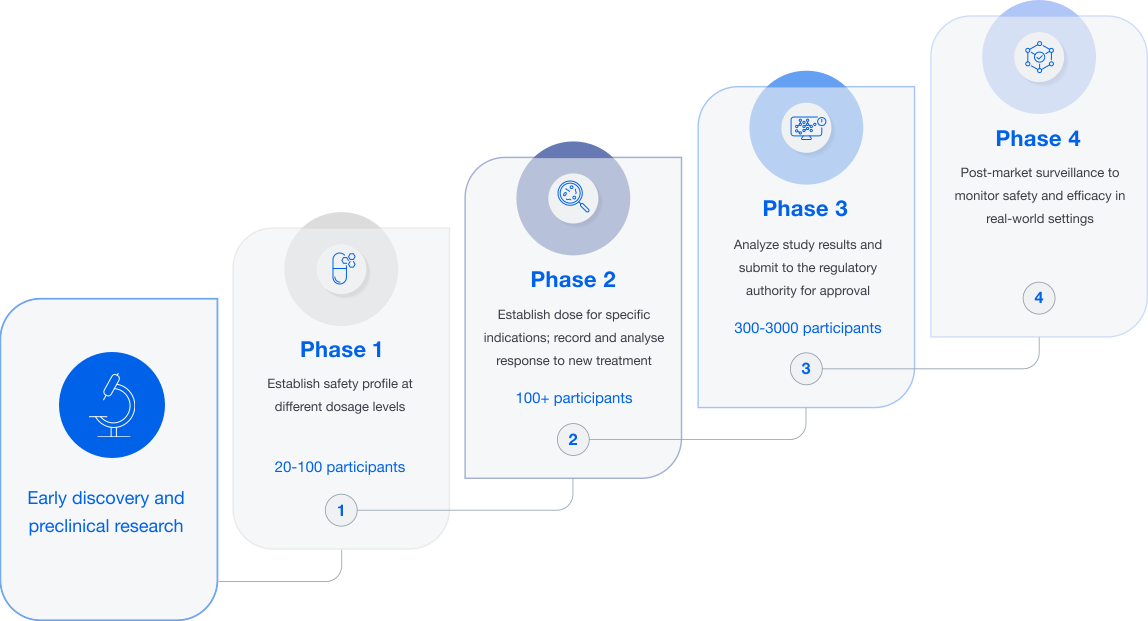
From early discovery to post-market surveillance, clinical research is a rigorous and intricate process designed to ensure that new treatments are safe, effective, and beneficial for patients. Each clinical trial phase – preclinical research, phase 1, phase 2, phase 3, and phase 4 – plays a critical role in this journey. By thoroughly assessing safety, efficacy, optimal dosing, and potential side effects, data from these phases collectively build a robust body of evidence that supports the approval and successful implementation of your novel therapy in a real-world setting.
Phase 1 clinical trials are the first stage of testing in human subjects. These trials primarily focus on evaluating the safety of a new treatment or drug. They involve a small group of healthy volunteers and aim to determine the maximum tolerated dose and initial pharmacokinetics.
Phase 2 clinical trials assess the efficacy of a treatment in a larger group of patients with the disease or condition targeted by the treatment. These trials further investigate safety and begin to explore appropriate dosages for the intended use.
Phase 3 clinical trials involve large-scale treatment testing in patients to confirm an intervention’s effectiveness, monitor side effects, and compare it to standard treatments or a placebo. These trials provide critical data for regulatory approval and broader clinical use.
Phase 4 clinical trials, also known as post-marketing studies, occur after regulatory approval. They monitor the treatment’s long-term safety and effectiveness in real-world settings, often involving large patient populations over extended periods.
The duration of each clinical trial phase can vary widely based on factors such as the type of treatment, disease complexity, patient recruitment, and regulatory requirements. Typically, the active participant period within a phase 1 trial lasts several months, while phases 2 and 3 trials can span several years. Phase 4 trials may continue indefinitely to monitor long-term effects.
A Contract Research Organization (CRO) manages various aspects of the different clinical trial phases on behalf of pharmaceutical, biotechnology, and medical device companies. Their responsibilities include study design, regulatory submissions, data management, monitoring and quality assurance to ensure trials are conducted efficiently and in compliance with regulatory standards.
Partner with Southern Star Research.
Discover why small and mid-sized biotechs, pharmaceutical and medical device companies worldwide choose Southern Star Research. Let’s talk about how to move your early-phase program forward with the speed, data quality, and senior accountability your investors and regulators expect.